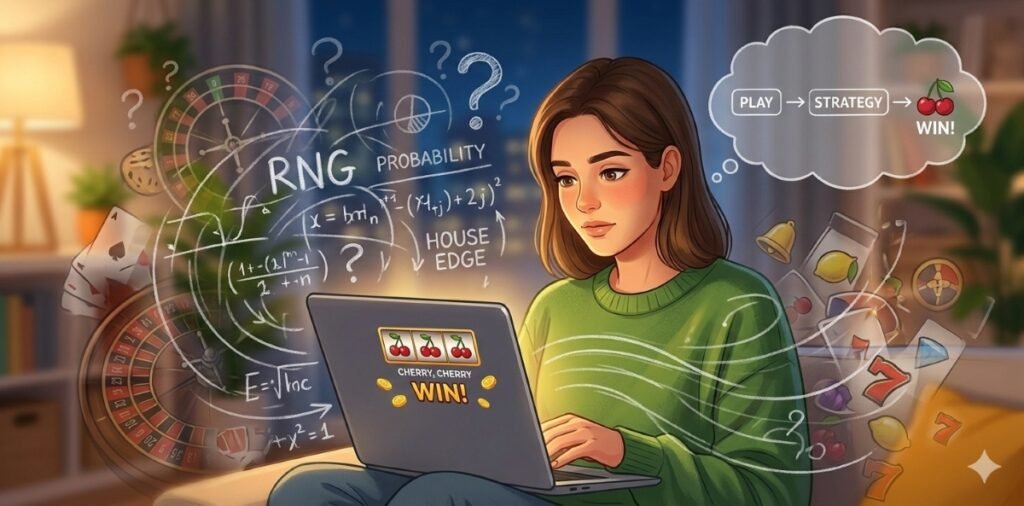


When people encounter random outcomes, they instinctively expect balance. Wins should offset losses. High results should be followed by low ones. Over time, things are expected to flatten out in a visible, orderly way. When this does not happen, randomness begins to feel suspicious.
This expectation runs deep. It feels intuitive, reasonable, and fair. Yet it does not reflect how random processes actually behave. Randomness does not aim for balance in short sequences. It naturally produces clustering, streaks of wins or losses, and uneven distributions as a consequence of chance itself. This persistent psychological tension is the reason humans frequently misinterpret random sequences, as the brain struggles to accept that true randomness looks far messier than our mental models of it.
Why Balance Feels Like Fairness
Humans tend to associate balance with justice. In everyday life, effort is often rewarded and mistakes are often corrected. Over time, things usually even out in ways that feel reasonable.
These experiences shape how randomness is interpreted. A balanced sequence aligns with moral intuition and therefore feels fair. An imbalanced sequence violates expectations about how things should unfold and therefore feels unfair. Random systems are indifferent to fairness. They do not self-correct to satisfy human intuition.
Why the Mind Searches for Symmetry
The human brain is a pattern-detection machine. It evolved to look for order, symmetry, and repetition—traits that were useful in predictable environments. In random sequences, this instinct misfires. The mind expects alternation and correction even when no causal relationship exists. When results repeat or cluster, the brain assumes something has changed.
Symmetry feels normal. Asymmetry feels suspicious.
Why Short Sequences Dominate Perception
People rarely evaluate randomness using large samples. Instead, randomness is experienced in short runs. In short sequences, imbalance is common. Long streaks, clusters, and gaps occur naturally. Without sufficient context, these sequences feel meaningful rather than expected.
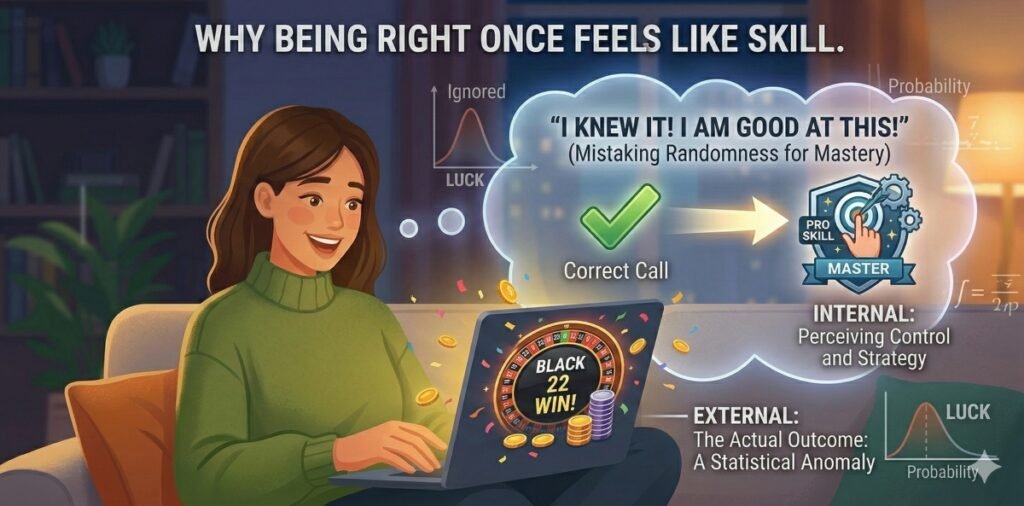
Because early experiences dominate memory, people conclude that randomness itself is malfunctioning—a pattern that closely mirrors why early wins are especially misleading.
How Recency Bias Strengthens the Expectation
Recent outcomes feel more informative than earlier ones. When a sequence leans heavily in one direction, recency bias amplifies discomfort. Instead of recognizing that randomness allows uneven runs, people believe balance is overdue. The longer the imbalance persists, the stronger the expectation becomes. This creates the false belief that the next outcome must restore balance.
Why Clustering Feels Like Manipulation
Clustering violates intuition. When the same result appears repeatedly, it feels intentional. People assume systems should prevent extreme streaks. When they do not, suspicion grows. Randomness is reinterpreted as bias, manipulation, or design failure.
In reality, clustering is not a failure of randomness—it is one of its defining features. This misunderstanding is commonly known as the gambler’s fallacy.
Why the Law of Large Numbers Is Misapplied
Many people vaguely understand that outcomes tend to converge toward averages over time. This idea, however, is often misused. Balance emerges statistically across very large samples—not emotionally salient short sequences. Expecting rapid balance applies a long-term principle to short-term experience. This misapplication fuels disappointment and mistrust.
Why Experience Rarely Corrects the Expectation
Even repeated exposure rarely eliminates the expectation of balance. Emotional responses to imbalance are strong and persistent. People remember extreme streaks more vividly than ordinary runs. These memories reinforce the belief that imbalance is abnormal. Intellectual understanding of randomness does not automatically regulate how imbalance feels.
Why This Expectation Appears Everywhere
The expectation of balance appears in games, finance, forecasting, and everyday judgment. Wherever randomness is encountered repeatedly, the same discomfort emerges. Humans did not evolve to intuitively understand probability distributions. They evolved to respond to patterns. Randomness exploits that mismatch.
Humans expect balance in random sequences because balance feels fair, orderly, and reassuring. Randomness does not share those priorities. It naturally produces imbalance—often early, frequently, and without explanation. Until this difference is recognized, random sequences will continue to feel wrong even when they are functioning exactly as intended.
Core Takeaway
Randomness is not broken when it produces streaks, clusters, or imbalance. It is behaving exactly as probability dictates. The human expectation of balance reflects moral intuition and pattern-seeking instincts, not statistical reality. Recognizing this mismatch helps explain why random systems often feel unfair, even when they are perfectly neutral.