
Probability figures often feel like predictions. When people see a numerical likelihood attached to an outcome, they instinctively interpret it as a statement about what will happen next. High numbers feel reassuring, while low numbers feel easy to dismiss. This reaction is intuitive, but deeply misleading.
The core issue is that probability figures are not designed to promise the future. They describe relative likelihood within uncertainty, and in many cases, they are generated inside systems designed to manage risk and maintain balance rather than to predict individual outcomes. This is a primary reason why confidence grows faster than understanding; the presence of a number provides a false sense of certainty. This mental friction exists because of how intuition frequently clashes with the structural reality of probability, making it difficult for the human brain to accept statistical variance over gut feelings.
Why the Brain Turns Probability Into Narrative
A commonly overlooked factor is psychology. Humans evolved to search for patterns and anticipate outcomes. When a probability is presented, the brain does not store it as a neutral range or distribution. Instead, it converts the number into a story: “At this level, this should happen.”
This is not a failure of calculation but a feature of cognition. Faced with uncertainty, people tend to simplify complex information into more manageable judgments. In psychology, this tendency is often described as attribute substitution, replacing a difficult question (“How uncertain is this?”) with an easier one (“Will this happen?”). Feedback reinforces this habit. People observe outcomes after seeing probabilities and evaluate whether the number was “right” or “wrong.”
Why Likelihood Does Not Create Entitlement
Another common misunderstanding is treating probability as entitlement. Probability indicates how often something tends to occur across similar situations, not what should occur now. Expected value exists in the average, but reality unfolds one event at a time. According to research from the Society for Judgment and Decision Making, individuals frequently suffer from the “outcome bias,” where the quality of a decision is judged by its eventual result rather than the logic used at the time.
At the moment of decision, probability is often transformed emotionally into a sense that success is “owed.” When a high-likelihood outcome fails to appear, disappointment or suspicion arises, even though the result is statistically normal.
How Short Sequences Distort Judgment
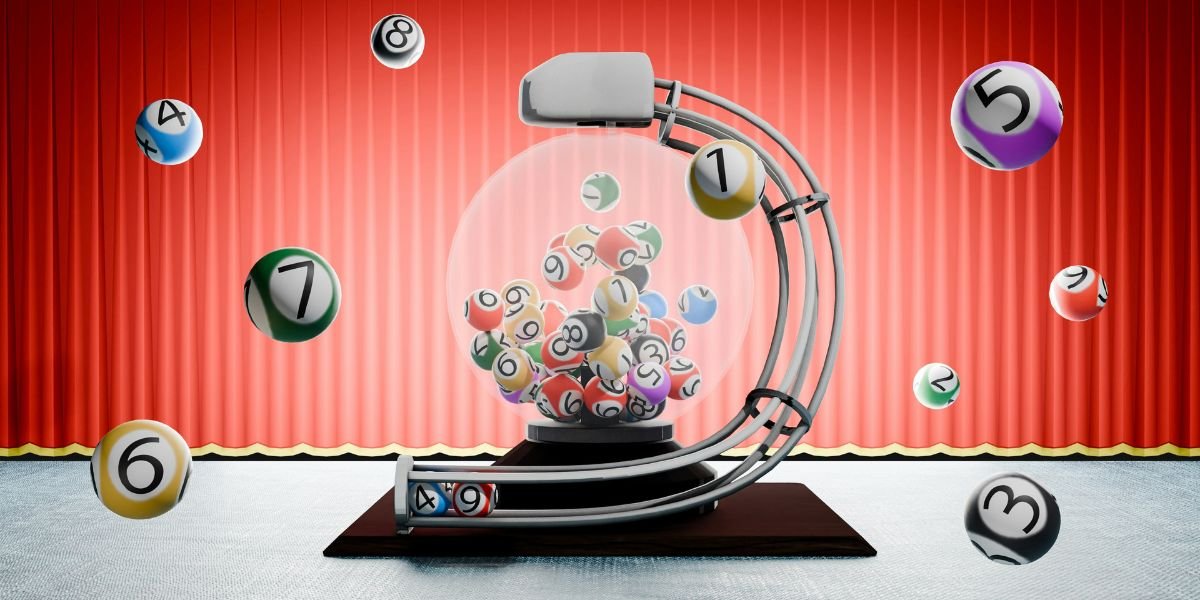
Short-term outcomes are far more salient than long-term patterns. Unlikely events that occur stand out sharply. Likely events that fail to occur feel like errors. Systems that provide rapid feedback encourage people to judge outcomes one by one. Over time, the brain is trained to treat probability figures as if they were designed to pass a simple true/false test, something probability was never meant to do. Expectations shift from evaluating uncertainty to evaluating the number itself.
Why Accurate Numbers Can Still Feel Wrong
Even perfectly calibrated probabilities can produce long stretches of disappointment. This is not a flaw, it is variance. Random processes cluster. Streaks, droughts, and gaps appear that feel counterintuitive. People often expect randomness to alternate smoothly, but reality does not behave that way. When intuition is violated, the probability figure is blamed. Accurate probabilities are uncomfortable precisely because they offer no guarantee of short-term satisfaction.
How Pricing Context Distorts Interpretation
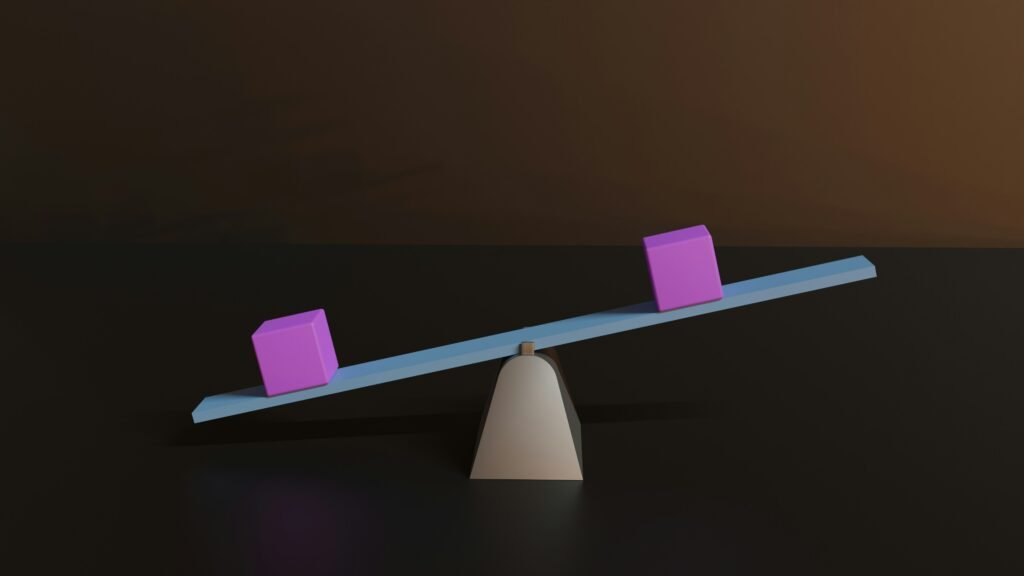
Another easily missed factor is context. Probability figures are often embedded in pricing systems, not forecasting tools. They reflect not only likelihood, but also balance, demand, and exposure. When priced probabilities are read as pure predictions, confusion follows. The number feels like a claim about reality, when it is actually a signal about system equilibrium. This disconnect explains why efficient systems can still feel unfair.
Why Outcomes Rewrite Memory
Once an outcome is known, memory adjusts. What happened feels inevitable. What did not happen feels like the probability was wrong. This hindsight confidence does not improve understanding, but it does strengthen self-belief. People build their sense of judgment on reconstructed memories rather than on uncertainty as it existed before the outcome.
Reading Probability as Uncertainty, Not Direction
Probability is not fate. It describes a range of possible futures, not a direction. When probability stops being treated as a directional signal, frustration decreases and understanding improves. Persistent misunderstanding is not a matter of intelligence. It arises from framing, from feedback that reinforces interpretation, and from discomfort with uncertainty itself.
Probability does not exist to tell what will happen next. It exists to describe how uncertain the situation is before anything happens. When this distinction becomes clear, surprise no longer feels like failure, it becomes a normal feature of uncertain systems.