
Imagine you are waiting for a bus. You have already waited for 30 minutes, but it has not arrived. You are worried you will be late. You could call a taxi right now and still arrive on time. However, you think to yourself, “I have already waited 30 minutes. If I leave now, that time was wasted. I should wait just a little longer.”
Another 20 minutes pass. The bus still hasn’t come. Now you are definitely late, and you are too frustrated to call a taxi.
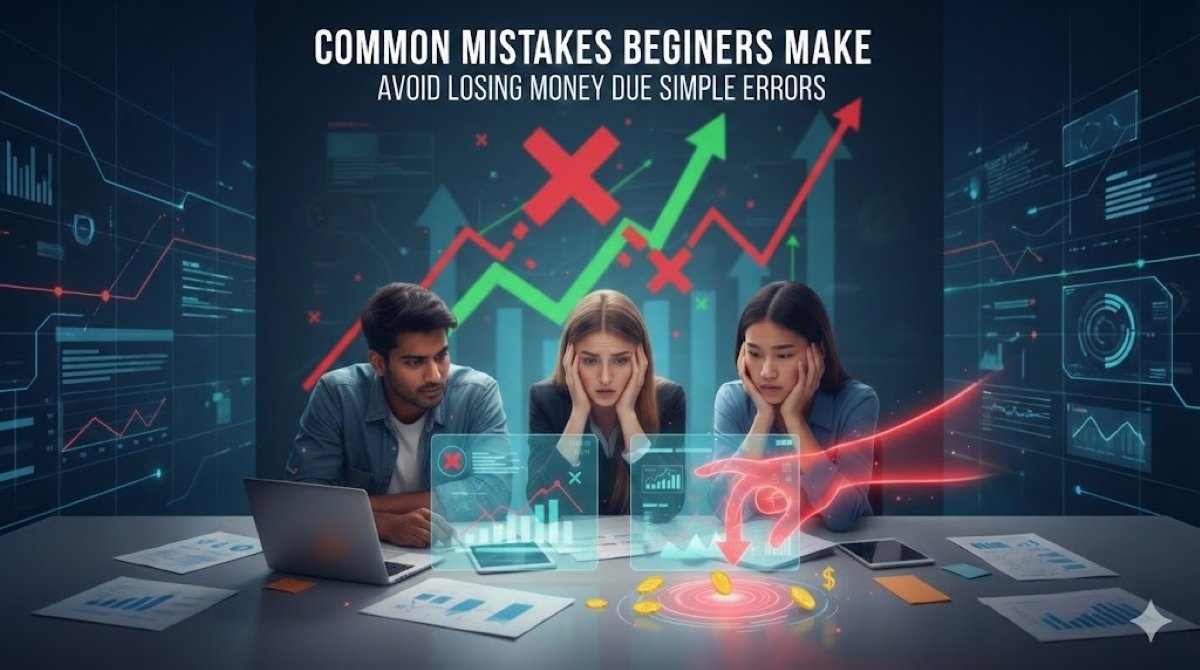
This situation is a perfect example of a psychological trap that affects almost everyone. In finance and decision-making, this is called the Sunk Cost fallacy or trap. It is one of the main reasons beginners lose control of their money and make losses much bigger than they need to be.
This article explains what the trap is in simple terms, why our brains fall for it, and how you can learn to escape it.
What Is a “Sunk Cost”?
A sunk cost is any money, time, or effort you have already spent that you cannot get back. It is gone forever.
- The price of a movie ticket you already bought is a sunk cost.
- The three years you spent studying a subject you no longer like is a sunk cost.
- The money you lost on an investment yesterday is a sunk cost.
The core rule of smart decision-making is this: Sunk costs should not affect your future decisions. Because that money or time is already gone, it does not matter anymore. You should only focus on what is best for your future right now.
The Trap: Throwing Good Money After Bad
The trap happens when we ignore that rule. Instead of looking forward, we look backward at what we already spent. We feel an emotional need to “justify” the past expense or try to “win back” the loss.
In financial terms, this often leads to the dangerous habit of “throwing good money after bad.”
For example, imagine you bought shares in a company for $1,000. A week later, the company has bad news, and your shares are now worth $700. You have a paper loss of $300.
A logical approach would be to ask: “Is this company likely to recover soon?” If the answer is no, the best move is to sell, accept the $300 loss, and save the remaining $700.
However, the Sunk Cost Trap makes you think differently. You might say, “I cannot sell now; I will lock in the loss! I need to wait until it gets back to $1,000 so I can break even.” Some people even buy more shares, trying to lower their average price.
Often, the price keeps dropping, and the $300 loss turns into a $600 loss. Trying to save the initial sunk cost ends up costing even more money.
Why Is It So Hard to Stop?
Why do intelligent humans do this? It is not because we are stupid; it is because we are emotional.
1. Loss Aversion
Psychologists have found that humans feel the pain of a loss twice as strongly as the joy of a gain. Losing $100 feels much worse than finding $100 feels good. We will do almost anything to avoid admitting we have officially lost money.
2. Fear of Waste
We are taught from a young age not to be wasteful. Admitting a mistake feels like admitting you wasted time or money. We stick with bad projects because we want to believe our initial effort had value.
3. Hope Over Logic
When we are in a losing position, we stop thinking with facts and start thinking with hope. We hope the situation will turn around magically, even if all the evidence says it will get worse.
How to Stay in Control and Escape the Trap
Recognizing that this trap exists is the first step to beating it. Here are practical ways to stay in control when you are facing a loss.
The “Clean Slate” Test
If you are holding a losing investment and don’t know if you should sell, use this mental trick. Imagine you do not own the investment at all. You have cash in your hand instead.
Now, look at that investment today. Would you buy it right now at its current price?
If the answer is “No, I wouldn’t buy that today,” then you should sell it immediately. If it’s not good enough to buy today, it is not good enough to keep.
Focus on the Future Opportunity
Do not think about the money you lost. Think about what the remaining money could do.
If you have $700 left from a bad investment, don’t focus on the missing $300. Focus on the fact that the $700 is currently trapped. If you sell, you free up that $700 to be placed into a much better opportunity that might actually grow.
Set Rules Before You Start
The best way to avoid emotional decisions is to make rules when you are calm. Before you put money into anything, decide your “exit point.”
For example: “If this drops by 10%, I will sell immediately, no questions asked.” This is often called a stop-loss. When you hit that point, do not argue with yourself. Just follow the rule you made earlier.
Core Takeaway
It is painful to accept that money is gone. No one likes to lose. However, successful people understand that trying to fix a past mistake by spending more money is a recipe for disaster.
The Sunk Cost Trap is just a trick of the mind. By letting go of the past and focusing only on the best action for today, you can regain control of your decisions and protect your future finances. Sometimes, the smartest thing you can do is quit.