
Sejong Insider

How Complexity Is Reduced After Outcomes

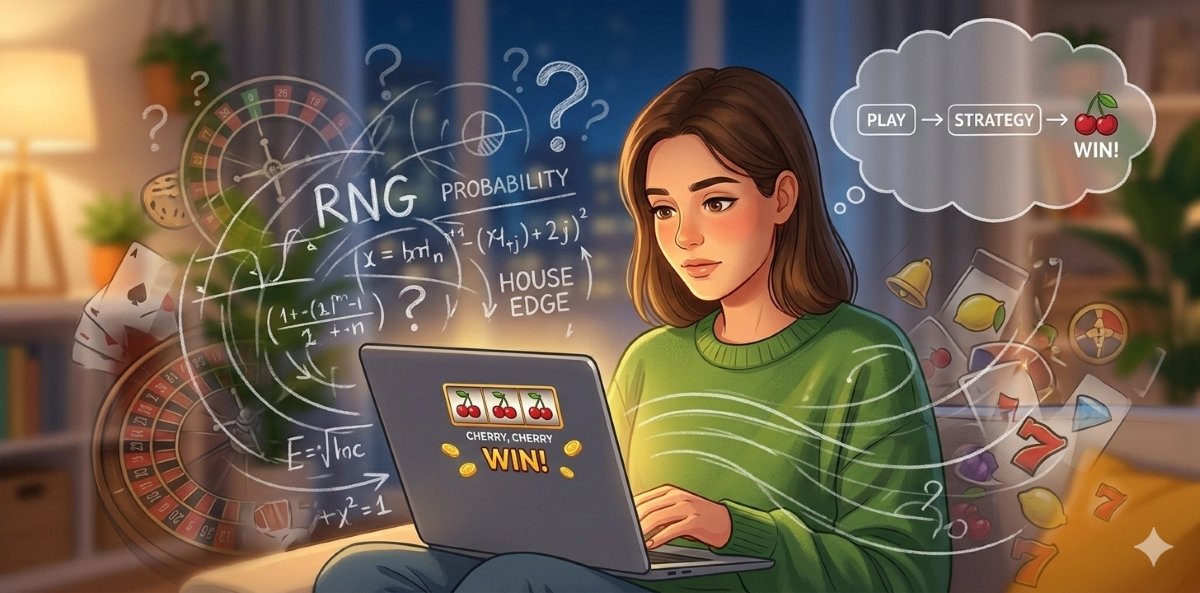
The world of online casinos is filled with fast-paced action and flashing lights. For many beginners, the experience can feel like a storm of numbers and symbols. Before a game begins, everything is uncertain. There are thousands of ways a slot machine could land, or a card could be dealt. However, a strange thing happens to our brains once the round is over. We tend to look back and see the result as much simpler than it really was. At Gambler Community, we find that understanding this mental shift is one of the most important lessons for anyone starting their journey.

The Hidden Chaos Before the Spin

Before you press the “spin” button on a digital slot machine, the reality is incredibly complex. Inside the software, a program called a Random Number Generator, or RNG, is working at high speed. It cycles through billions of mathematical possibilities every single second. Each number represents a different combination of symbols on the screen.

When you are about to play, you are facing a massive wall of probability. The outcome could be anything from a total loss to a massive jackpot. This is true complexity. There are no patterns to follow and no way to know which of those billions of numbers will be picked at the exact millisecond you click your mouse. For a beginner, this level of randomness is hard to fully grasp because we like to think we can predict things.

The Great Simplification

The moment the reels stop or the dealer reveals the final card, all that mathematical complexity vanishes. If a player sees three “Cherry” symbols, the outcome is now a simple fact. The billions of other possibilities that could have happened are immediately forgotten.

This is where our brains play a trick on us. We look at that single result and begin to feel that it was unavoidable. This is often called hindsight bias. We start to build a simple story around the win or loss. We might say, “I knew that machine was ready to pay,” or “I had a feeling a seven was coming.” By focusing on the one outcome that happened, we ignore the mountain of complexity that existed just a second earlier. We take a chaotic, random event and turn it into a simple, logical story in our heads.

Why We Ignore the Math

Our minds are not designed to think in terms of billions of random numbers. We prefer clear causes and effects. If we win, we want to know why. Since the real reason is “a computer picked a random number at the right time,” which is a boring explanation, we create simpler ones.

We might focus on a single factor. For example, a player might think they won because they changed their bet amount or because they played at 4:00 PM. This reduces the complexity of the RNG down to one easy-to-understand reason. While this makes us feel more comfortable and in control, it is not an accurate way to look at how online casinos work. The math remains complex, even if our memory of the result is simple.

The Danger of a Simple Memory

The reason this matters for beginners is that it changes how we play in the future. If we look back at a win and see it as a simple, predictable event, we become overconfident. We start to believe that we have figured out a “system” or a “secret.”

When we oversimplify the past, we underestimate the risk of the future. We forget that the next spin will be just as complex and random as the one before it. A player who thinks a win was “obvious” is much more likely to bet more money than they should. They are no longer playing against a random system; they are playing against a story they told themselves. At Gambler Community, we always encourage players to remember that the complexity of the RNG never goes away. It is there before, during, and after every single round.

Staying Grounded in Reality

To keep the game fun and safe, it helps to practice a more realistic way of analyzing your results. Instead of letting your brain simplify the outcome, try to remind yourself of the truth.

  • Every outcome is a surprise: Even if you “felt” a win was coming, tell yourself that it was one of many possibilities.

  • Respect the RNG: Remind yourself that the computer is doing work you cannot see or predict.

  • Keep the big picture in mind: One result is just a tiny dot in a huge map of data.

By accepting that the complexity of the game is always there, you protect yourself from the trap of overconfidence. You can enjoy the thrill of the “hit” without thinking you have mastered a secret code.

A Better Way to Play

The goal of playing at an online casino should be entertainment. When we understand that outcomes are random, we can set better limits. We don’t chase losses because we know the next result isn’t “due” to be simple. We don’t overspend on wins because we know the next spin is just as complex as the last.

The most successful players are those who can walk away knowing that they were either lucky or unlucky, but never “certain.” Keeping the complexity in mind helps you stay disciplined and keeps the games exactly what they should be: a way to have a little bit of fun in your free time.
How Certainty Grows Without New Information

When we first start playing at an online casino, we often find ourselves feeling very sure about what will happen next. You might be watching a digital roulette wheel or playing a specific slot game, and suddenly, you feel a deep sense of certainty. You tell yourself that a win is coming. You feel so confident that you might even consider increasing your bet.

The strange thing about this feeling is that it often happens even when we haven’t learned anything new about the game. No one has shown us the secret code, and the odds haven’t changed. Understanding why our brains create this false sense of certainty is the best way to stay in control and enjoy the game safely.

The Power of Familiarity

Our brains are designed to like things that feel familiar. In psychology, this is called cognitive ease. When we think about a certain idea over and over, it becomes easier for our brain to process. Because it is easy to think about, our brain assumes it must be true.

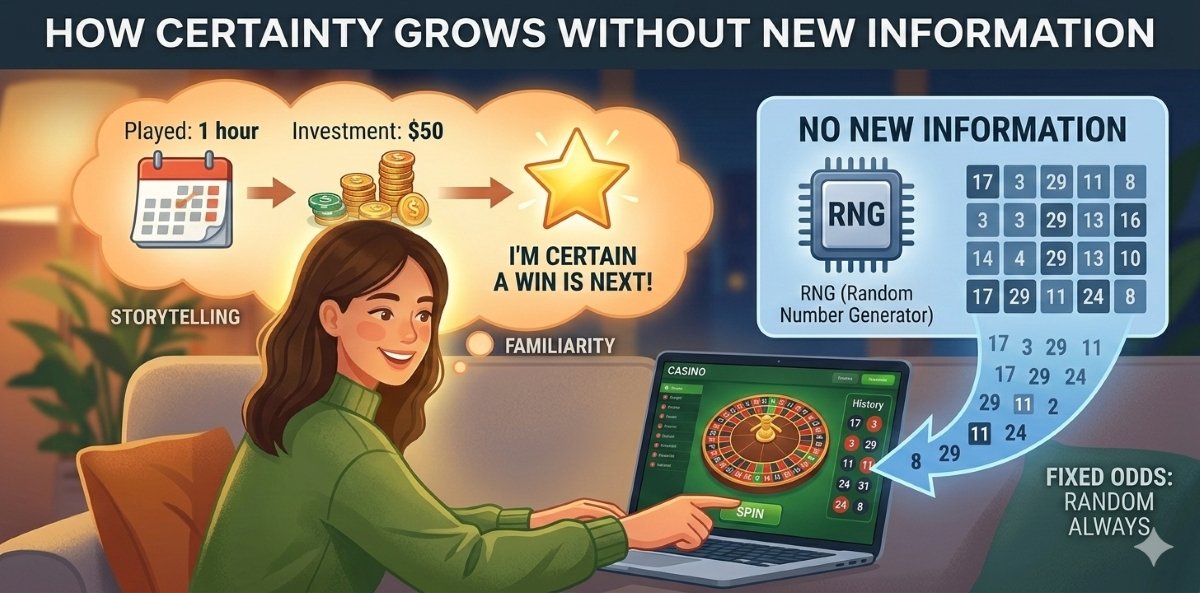
Imagine we are playing a slot game for an hour. We have seen the symbols spin hundreds of times. We haven’t learned anything new about the Random Number Generator (RNG), which is the computer program that decides the outcome. However, because we have been sitting there so long, the game feels familiar. This familiarity makes us feel more certain that we “know” how the game behaves. We aren’t actually more informed, but we feel like we are because the environment is no longer new to us.

Telling Stories to Fill the Gaps

Humans are natural storytellers. We hate randomness because it feels chaotic and unpredictable. To fix this, we create stories to explain what we see. If we see a roulette ball land on “Red” three times, we tell ourselves a story. We might say the wheel is “stuck” on red, or we might say that black is “overdue.”

Every minute we spend watching that wheel, our story becomes more detailed in our minds. Even though the actual information (the odds of the next spin) stays exactly the same, our story makes us feel more certain. We start to believe our own narrative. This is how certainty grows in total silence. We aren’t getting new data from the casino, but we are producing a lot of “data” in our own heads.

The Investment Trap

Another reason certainty grows without new information is because of the time and money we invest. When we put effort into something, we want it to be worth it. If we have been playing a game for two hours without a win, we often feel more certain than ever that the next spin will be the big one.

This happens because our brain is trying to protect us from the idea that we might have just been unlucky. It is much more comfortable to believe that a win is “locked in” and guaranteed to happen soon. We use certainty as a shield against frustration. The more we invest, the more certain we feel we must be right. In reality, the machine has no memory of our investment. It treats our first spin exactly the same as our thousandth spin.

The Illusion of Patterns in History

Most online casinos show a “history” of recent results. We might see a list of the last twenty numbers in roulette or the last few winners in a lobby. While this looks like new information, for a beginner, it is often just a distraction.

In a fair and licensed online casino, every round is independent. This means the result of the last round has zero impact on the result of the next one. When we stare at these history boards, we start to see patterns. We might think, “I see a pattern of low numbers, so a high number is coming.” We haven’t actually learned anything that helps us predict the future, but because we are “analyzing” the past, our confidence goes up. We feel like we are doing research, but we are actually just looking at random noise.

How to Stay Grounded

Recognizing that certainty is often just a trick of the mind is a powerful tool for any beginner. Here are a few ways we can stay rational:

  • Acknowledge the RNG: Remind yourself that a computer program is deciding the outcome randomly every single time. It doesn’t have a plan and it doesn’t follow a story.

  • Check your feelings: If you suddenly feel “100% sure” that a win is coming, ask yourself why. If the only reason is “I just feel it,” then you are likely experiencing this false certainty.

  • Stick to the math: The only information that actually matters is the Return to Player (RTP) percentage and the house edge. These numbers stay the same regardless of how certain you feel.

  • Take a break: If your certainty is making you want to bet more than your budget allows, it is time to step away. A short walk can help reset your brain and break the “story” you’ve been telling yourself.

Playing for Fun, Not for Certainty

At the end of the day, the thrill of an online casino comes from the fact that we don’t know what will happen. When we try to force certainty onto a random game, we take away the fun and increase the risk.

By accepting that we will never have “new information” that allows us to predict a random spin, we can play more responsibly. We can enjoy the wins when they happen as happy surprises, rather than results we were “sure” about. Keeping this perspective helps us stay within our limits and keeps the games exactly what they should be: a form of entertainment.